July 3, 2026 By: JK Tech
For years, the smart home race has really just been about piling on more devices. Smart speakers answered questions. Cameras kept an eye on the front door. Lights turned on when you asked. All convenient, sure, but most of these gadgets solved one small problem at a time instead of actually making everyday life easier.
Now AI companies are starting to chase a different problem altogether.
Running a household isn’t hard because people lack gadgets. It’s hard because there are a hundred little things to keep track of. School events, grocery lists, doctor’s appointments, birthdays, bills, after school activities, and whatever random task pops up that day. Most families have one person who ends up holding all of this in their head.
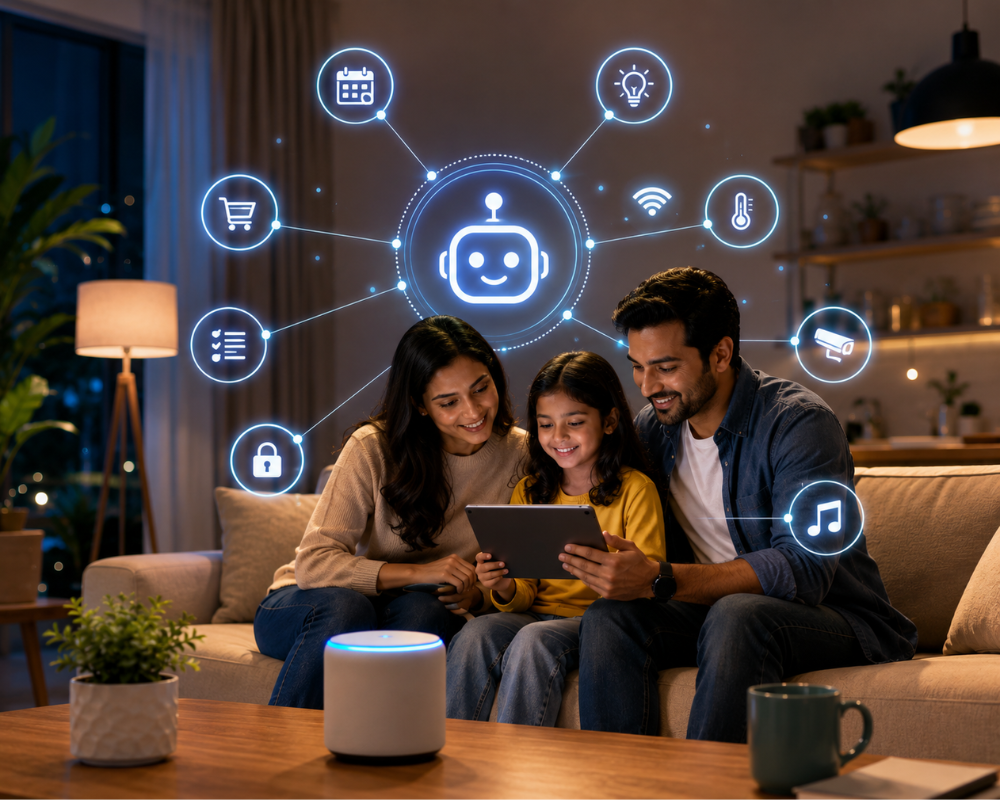
So instead of building another assistant that just sits around waiting for commands, some developers think AI should actually understand routines and step in at the right moment. The idea is pretty simple. If the system notices you’re running low on something you buy every week, or catches two calendar events clashing, it can flag it before it turns into an actual problem.
That doesn’t mean AI starts making decisions for you. People are still in the driver’s seat. Think of it more as an extra set of eyes, catching stuff that’s easy for a busy person to miss.
It sounds like a small shift, but it isn’t.
The real burden in most homes isn’t physical work. It’s remembering everything. Keeping that mental checklist running all day takes energy, even when you don’t notice it happening. And forgetting one appointment, missing one school deadline, can throw off an entire week.
If AI can take some of that mental load off people’s plates, it stops being just another productivity app. It becomes something people actually want.
But for that to work, the software has to learn how each family actually runs. No two households operate the same way. Some plan every meal a week out. Others figure it out as they go. Some families live off a shared calendar, others just rely on group texts and memory.
Given enough time, AI can start picking up on those patterns. Shopping habits, recurring appointments, family schedules, personal quirks. That context is what makes its suggestions feel useful instead of like the generic reminders we already get and ignore.
Of course, that opens up a whole different issue.
The more an AI knows about a household, the more privacy starts to matter. Families won’t trust a system with that much personal detail unless they know exactly how it’s being used. That’s probably why a lot of newer AI products are leaning into transparency. Instead of quietly taking action on its own, the system asks first and lets people stay in charge of every call.
That feels a lot more realistic than trying to automate everything away.
It also changes how we should be thinking about smart homes in general. Right now, most connected devices work in their own little silo. Your calendar lives in one app. Your shopping list is somewhere else. Reminders are scattered across five different services. Everything’s technically connected, but it rarely feels like it’s actually working together.
Maybe the next phase isn’t about adding more devices at all. Maybe it’s about connecting the information people are already juggling every day. If AI can pull those scattered pieces together and actually make sense of them, the home itself starts to feel more organized, without adding a single new gadget.
That’s probably where the real opportunity is.
The smartest home of the future might not be the one packed with the most tech. It could just be the one that helps families remember less, worry less, and spend a bit more time actually being together.