August 10, 2026 By: JK Tech
Cloud computing has moved beyond basic storage and infrastructure. In 2026, businesses are using cloud platforms to support AI workloads, data analytics, application modernization, automation, cybersecurity, and global digital operations.The growing demand for flexibility has also increased the importance of cloud engineering.
Businesses need more than a cloud platform; they need the right architecture, security controls, integrations, automation, and optimization strategy to get measurable value from it. For organizations evaluating cloud computing services, understanding the strengths of leading platforms can help them choose an environment that matches their technology and business requirements.
Why Cloud Platforms Matter More in 2026
Modern businesses need technology environments that can adapt quickly to changing workloads.
Cloud platforms help organizations:
- Scale computing resources based on demand
- Deploy applications faster
- Support AI and machine learning workloads
- Analyse large volumes of data
- Connect distributed teams and systems
- Modernize legacy applications
- Improve infrastructure flexibility
But choosing a platform is only the beginning. Cloud computing engineering determines how effectively that platform is designed, integrated, secured, and managed.
Top Cloud Platforms Driving Digital Transformation in 2026
1. Amazon Web Services (AWS)
Amazon Web Services remains one of the most widely used cloud platforms, offering services across computing, storage, databases, analytics, networking, security, and AI.
Businesses can use AWS to build scalable applications, modernize infrastructure, support data-intensive workloads, and deploy cloud-native solutions.
Best suited for: Organizations looking for a broad cloud ecosystem with extensive infrastructure and application services.
2. Google Cloud
Google Cloud has a strong position in areas such as data analytics, artificial intelligence, machine learning, and cloud-native application development.
Its data and AI capabilities make it relevant for businesses looking to build intelligent applications and turn large datasets into actionable insights.
Best suited for: Data-driven organizations, AI-focused workloads, and cloud-native application development.
3. Microsoft Azure
Microsoft Azure is particularly relevant for enterprises already working extensively with Microsoft’s technology ecosystem.
Azure supports application development, data analytics, AI, virtual infrastructure, security, and hybrid cloud environments.
Its integration with Microsoft technologies can make it an attractive option for organizations looking to connect existing enterprise environments with modern cloud capabilities.
Best suited for: Enterprises with Microsoft-centric technology environments and hybrid-cloud requirements.
4. Oracle Cloud Infrastructure
Oracle Cloud Infrastructure is particularly relevant for organizations running enterprise databases and Oracle applications.
OCI provides cloud infrastructure and services designed to support enterprise workloads, databases, applications, analytics, and modernization initiatives.
Best suited for: Enterprises with significant Oracle workloads and database-driven applications.
5. IBM Cloud
IBM Cloud focuses strongly on enterprise workloads, hybrid cloud environments, AI, security, and regulated industries.
Its capabilities can be useful for organizations that need to connect existing infrastructure with modern cloud environments while maintaining strong governance requirements.
Best suited for: Large enterprises, regulated industries, and hybrid-cloud environments.
Cloud Platform vs Cloud Engineering: Why Both Matter
Selecting AWS, Azure, Google Cloud, or another platform does not automatically create a successful cloud environment.
This is where cloud engineering becomes important.
Cloud engineering involves designing and optimizing the environment around business requirements, including:
Architecture → Security → Automation → Integration → Monitoring → Optimization
For example, two companies can use the same cloud platform but achieve very different results because their architectures, workloads, security models, and optimization strategies are different.
How Cloud Engineering Makes Cloud Platforms More Valuable
Intelligent Resource Management
Cloud engineering can help organizations design infrastructure that adjusts to workload requirements instead of relying on unnecessarily large resources.
This can improve resource utilization and help control infrastructure costs.
Application Modernization
Businesses often have applications built for traditional infrastructure.
Cloud engineers can help organizations assess these applications and determine whether they should be:
- Rehosted
- Refactored
- Replatformed
- Rebuilt
- Retired
This makes cloud adoption more strategic rather than simply moving existing systems to the cloud.
Infrastructure Automation
Manual infrastructure management can become difficult as environments grow.
Automation can help standardize deployments, reduce repetitive tasks, and improve consistency across development and production environments.
Security by Design
Cloud security should be incorporated into architecture from the beginning.
Engineering teams can implement controls around:
- Identity and access
- Data protection
- Network security
- Monitoring
- Compliance
- Threat detection
How Businesses Are Using Cloud Platforms in 2026
Cloud platforms are increasingly becoming the foundation for several high-growth technology initiatives.
AI and Generative AI
Businesses are using cloud infrastructure to access the computing resources and services required for AI development, model training, deployment, and application integration.
Data and Analytics
Cloud environments allow organizations to process and analyse large datasets without maintaining equivalent physical infrastructure.
Application Modernization
Organizations are moving legacy applications toward more flexible architectures to improve performance, scalability, and maintainability.
Remote and Distributed Operations
Cloud-based applications enable employees and teams to access business systems across locations while supporting centralized management.
Digital Commerce
Retailers and digital businesses can use cloud infrastructure to handle fluctuating traffic, integrate applications, and support personalized customer experiences.
How to Choose the Right Cloud Platform
There is no single cloud platform that is ideal for every organization. Businesses should evaluate platforms based on:
| Consideration | Why It Matters |
| Existing Technology | Determines integration complexity |
| Workload Type | Different platforms may suit different applications |
| AI & Data Requirements | Important for analytics and AI-driven workloads |
| Security | Protects applications and business information |
| Scalability | Supports future business growth |
| Cost Structure | Helps manage long-term cloud spending |
| Compliance | Important for regulated industries |
| Engineering Expertise | Determines how effectively the environment can be implemented |
The right choice should be based on business requirements rather than simply choosing the most popular platform.
What the Future of Cloud Engineering Looks Like
Cloud engineering is becoming increasingly connected with automation, AI, security, and multi-cloud environments.
Businesses are likely to focus more on:
- AI-assisted cloud operations
- Automated infrastructure management
- Cloud cost optimization
- Multi-cloud strategies
- Cloud-native development
- Advanced security automation
- Sustainable cloud infrastructure
This means future cloud professionals will need to understand both technology and business outcomes.
Conclusion
The leading cloud platforms in 2026 are helping businesses build scalable applications, modernize infrastructure, support AI initiatives, and manage data efficiently.
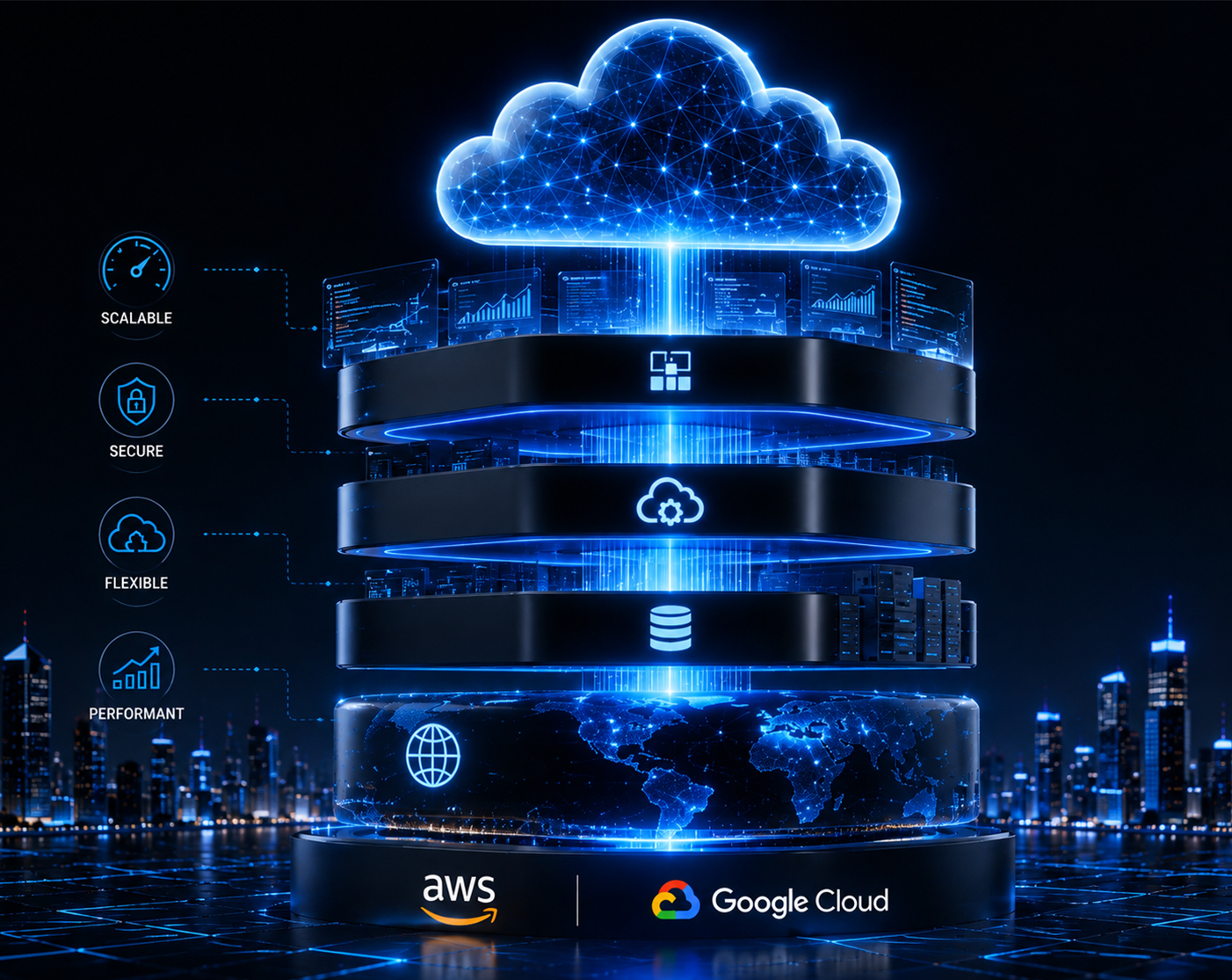
Platforms such as AWS and Google Cloud offer powerful capabilities for diverse business workloads and digital transformation initiatives. With effective cloud engineering services, businesses can design secure architectures, automate infrastructure, and optimize performance. JK Tech provides cloud engineering expertise across platforms such as AWS and Google Cloud, helping businesses build flexible and scalable cloud environments.

Table of Contents
- Why Cloud Platforms Matter More in 2026
- Top Cloud Platforms Driving Digital Transformation in 2026
- Cloud Platform vs Cloud Engineering: Why Both Matter
- How Cloud Engineering Makes Cloud Platforms More Valuable
- How Businesses Are Using Cloud Platforms in 2026
- How to Choose the Right Cloud Platform
- What the Future of Cloud Engineering Looks Like
- Conclusion